
Table of Contents
You already know that salmon and oats are good for your heart. But knowledge doesn’t always make it onto your plate. When you’re tired, hungry, and staring into a fridge full of random containers, “eat heart-healthy” sounds like an instruction from someone who has never had a busy week.
This plan is different. It breaks the process into seven small actions. Each one is simple enough to do today, and together they build a diet that supports your heart without taking over your life. No strict rules. No obscure ingredients. Just a clear way to turn all that nutrition advice into meals you’ll actually enjoy.
Step 1: Audit One Plate, Not Your Whole Diet
Forget overhauling every meal at once. Start with one plate, the one in front of you tonight. Look at what takes up the most space. Is it bread, pasta, rice, meat, or vegetables?
For a visually simple target, fill half your plate with vegetables or fruit, one quarter with protein, and the last quarter with whole grains or starchy vegetables like sweet potato. You don’t need to weigh anything. This shape is the base of every heart-healthy eating plan.

If you want to understand why these proportions matter, the practical guide to heart-healthy foods breaks down the nutrition you’re getting from each section of the plate.
Step 2: Build Your Grocery List Around Six Food Groups
Most lists of “foods for heart health” read like a scavenger hunt. Instead of chasing single “superfoods,” shop in six repeatable categories:
- Vegetables and fruits – fresh or frozen, the more variety the better
- Whole grains – oats, barley, quinoa, brown rice, whole wheat
- Beans and lentils – chickpeas, black beans, kidney beans, edamame
- Fatty fish and lean poultry – salmon, sardines, mackerel, chicken, turkey
- Nuts and seeds – walnuts, almonds, chia seeds, ground flaxseed
- Healthy fats – extra-virgin olive oil and avocado
The full real-world grocery list takes these categories aisle by aisle, so you can shop without second-guessing every label.
Step 3: Prep Once, Eat Three Times
The “at” heart-healthy days happen when you’re too hungry to cook. That’s why a small amount of weekly prep beats daily motivation.
Pick one or two items that keep well in the fridge:
Roast a sheet pan of broccoli, carrots, and red peppers with olive oil at 220°C for 25 minutes. Cook a large batch of barley or quinoa to use as the base for grain bowls. Bake or poach a few chicken breasts or salmon fillets.
You don’t need to prep every element. Even having one cooked component changes your dinner speed dramatically. When you come home tired, you only need to quickly assemble a bowl instead of cooking from zero.
Step 4: Cut the Hidden Sodium Without Losing Taste
Most dietary sodium comes from packaged foods, not your salt shaker. A simple swap like switching from a bouillon cube to low-sodium stock can shave off hundreds of milligrams. The simplest test: compare the sodium numbers on two similar products and choose the lower one.
For sharper flavor, rely on these three combos instead of salt:
Three swaps that work right away
- Use dried mushrooms for umami. Add a few chopped dried porcini mushrooms to soups or tomato sauces. They bring a deep, savory intensity that makes you forget the salt.
- Make a no-salt spice mix. Combine black pepper, smoked paprika, garlic granules, and dried lemon zest. Rub it on chicken or roasted vegetables.
- Rinse canned beans. Drain and rinse chickpeas and black beans under cold water for 30 seconds. This removes about 40% of the sodium without changing the taste.
Aim to stay below 2,300 mg of sodium per day, but don’t beat yourself up over one high-salt meal. Focus on bringing the weekly average down.
Step 5: Run Every Meal Through a Four-Point Check
When you sit down to eat, run a quick mental checklist. You can use this for dinner, lunch, or even a snack.
- Fibre: At least 10 grams at main meals
- Protein: About 20–30 grams, from plants, fish, poultry, or fermented dairy
- Healthy fat: A drizzle of olive oil, a few nuts, or some avocado
- Colour: At least three different colours on your plate
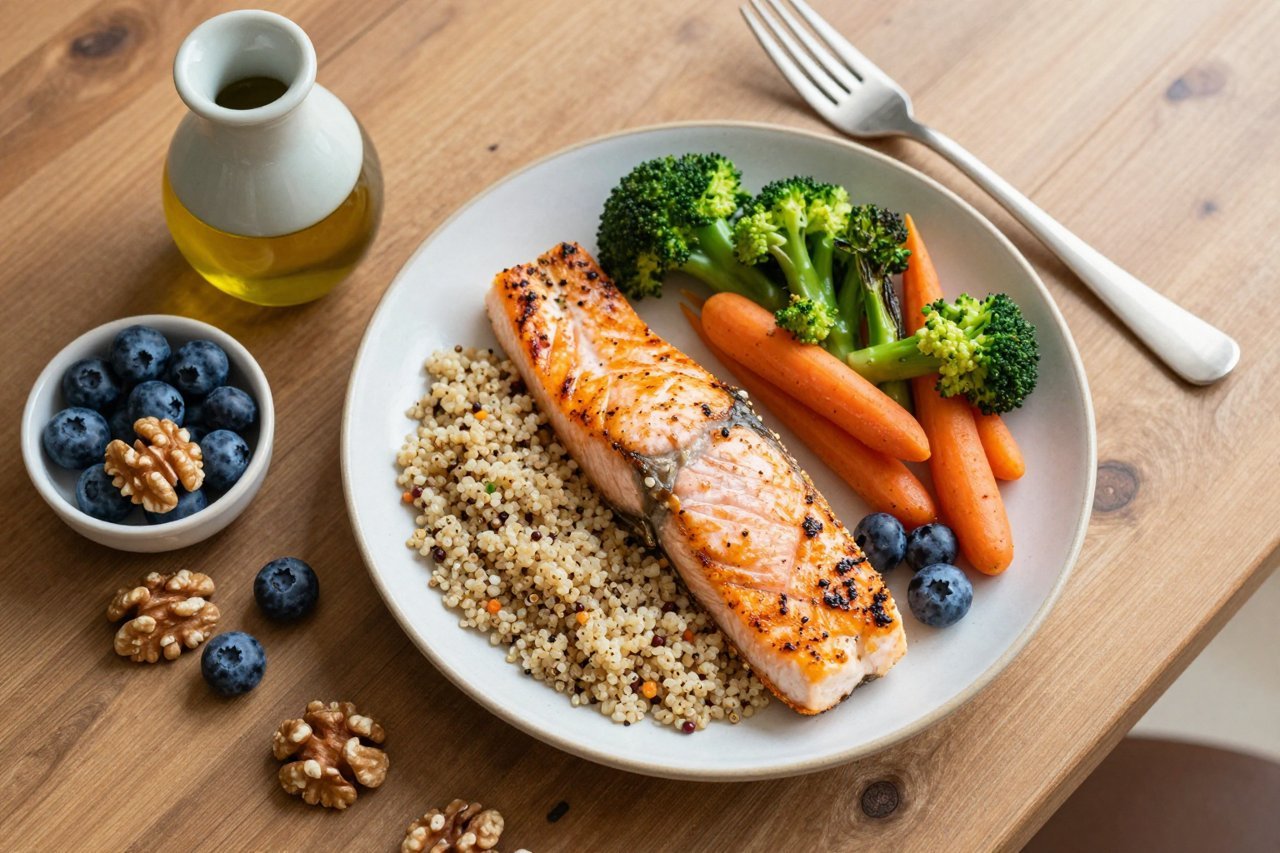
Take a simple dinner: grilled salmon, quinoa, and roasted broccoli. It clears every point. If you only hit three out of four, you’re still doing well. If you need fresh ideas for the protein part, this guide to protein-rich foods shows you how to hit that target without loading up on saturated fat.
Step 6: Tame Sugar and Refined Carbs Without Going Extreme
Added sugar increases inflammation and raises triglycerides, which is a risk factor for heart disease. But not all carbohydrates behave the same.
A bowl of strawberries with a spoonful of Greek yoghurt has less sugar than that same bowl made with a muffin on the side. Choose whole fruit over dried fruit, because dried fruit is more concentrated in sugar and easier to overeat. Swap white rice for barley or farro once a week. Those changes feel ordinary, which is exactly why they stick.
If you also live with diabetes or prediabetes, the carb portion matters even more. This guide to foods for diabetes walks through which carbohydrate choices are least likely to spike blood sugar while still protecting your heart.
Step 7: Track One Metric, Not Ten
You don’t need to obsess over every calorie or macro. But tracking one simple metric can keep you honest without becoming a chore. Choose blood pressure, blood sugar, or even how your clothes fit. Check it once a week at the same time of day and note the trend. Skip daily weigh-ins.
If you decide to log meals for a short period, approach it with curiosity rather than judgement. This guide to calories in foods helps you separate the numbers that actually affect your heart from the noise.
A Sample Day When It All Comes Together
Here’s a full day of meals that follows all seven steps. Use it as a template and rotate foods based on what’s in season or on sale.
Breakfast: Overnight oats made with unsweetened soy milk, a tablespoon of chia seeds, 150g of blueberries, and a handful of walnuts.
Lunch: A bowl with leftover quinoa, roasted peppers, baked salmon, fresh spinach, and a simple olive oil and lemon dressing.
Snack: An apple with 12 almonds.
Dinner: Black bean quesadilla made with corn tortillas, roasted vegetables, and a slice of avocado.
That day includes over 30 grams of fibre, plenty of omega-3 fats, and way less sodium than the average takeaway-focused week. Now look at your grocery list and choose the one step you’ll take tomorrow. Then do it again the next day. Your heart doesn’t need perfection, just repeated forward steps.


