
Table of Contents
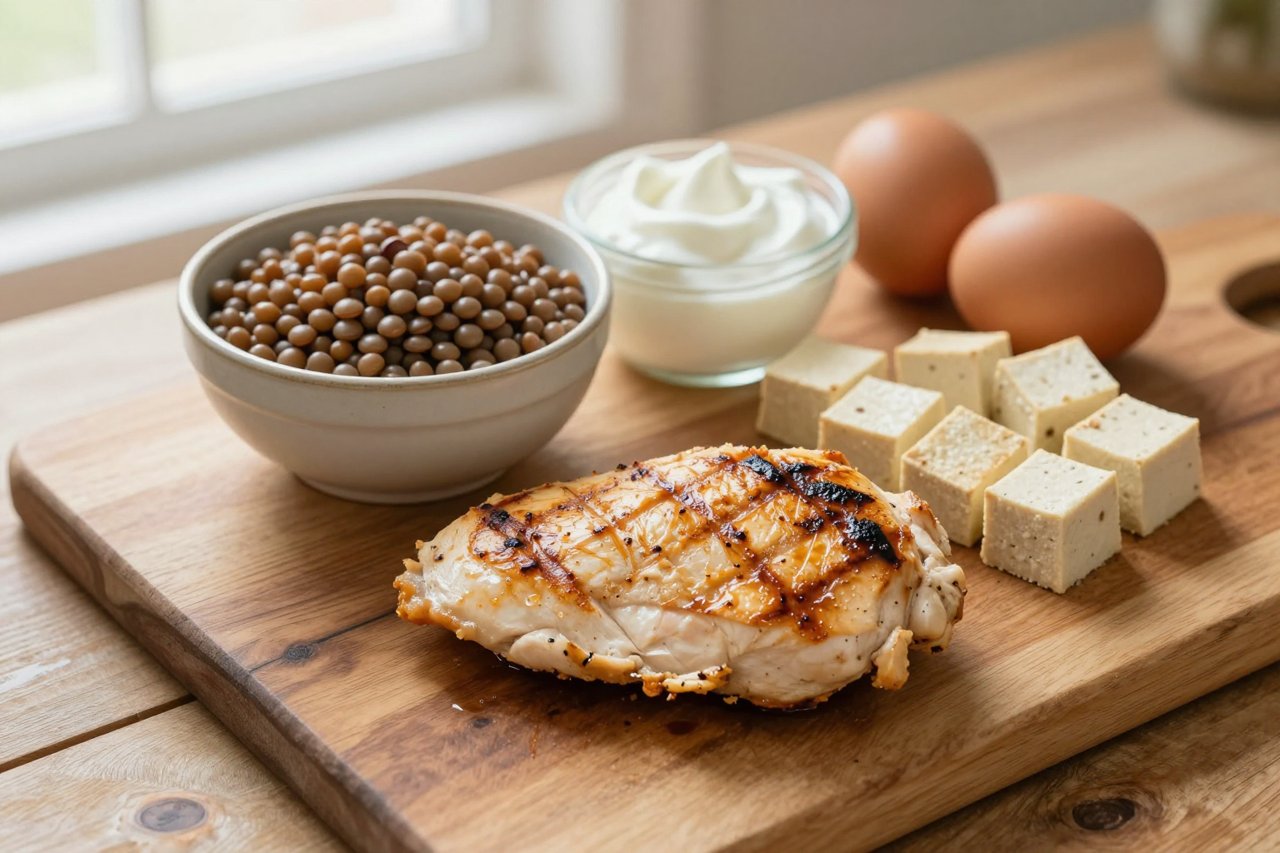
A palm-sized chicken breast. A tin of tuna. A tub of Greek yogurt with the spoon still in it. Most of us could name protein-rich foods without pausing. Far fewer could say what protein actually does once it’s inside the body, how much of it is enough, or why a bowl of beans and rice earns its place next to a steak.
So here’s the ground floor. What protein is, where to find it, how much you need, and how to slot it into meals you already eat. No biochemistry degree required, and no supplement tub necessary.
What Protein Actually Is
Protein is a chain of smaller molecules called amino acids. Your body uses twenty of them and can build eleven on its own. The other nine are essential, which means they have to arrive through food. That single fact explains most of the advice that follows.
Once digested, those amino acids get reassigned to whatever the body needs that day. Some rebuild muscle tissue after a workout or a long shift on your feet. Others become enzymes that break down your lunch, antibodies that see off a cold, or the collagen that keeps skin and joints springy. Haemoglobin, the molecule that carries oxygen around your blood, is protein. So is insulin. When people talk about protein purely in terms of biceps, they’re describing maybe a tenth of the job.

Protein also digests more slowly than carbohydrate, which is part of why a breakfast with eggs tends to hold off hunger until noon while a bowl of cereal often doesn’t.
How Much Protein Do You Actually Need?
The textbook figure is 0.8 grams per kilogram of body weight per day. For someone weighing 70kg, that’s 56 grams, roughly two chicken breasts and a yogurt spread across the day.
That number is a floor to prevent deficiency, not a personal target. If you lift weights, train for a sport, are over 60, or are recovering from illness, the research points higher. Around 1.2 to 1.6 grams per kilogram is common guidance for active adults, and closer to 2.0 for people in hard training or deliberately losing fat while protecting muscle. An 80kg runner eating at 1.5 g/kg is aiming for 120 grams a day.
Timing matters less than total, but it isn’t irrelevant. Muscle-building studies suggest three or four meals of roughly 25 to 30 grams each works better than one enormous dinner. In practice that means most people need to fix breakfast and lunch rather than add a fourth meal. If you’d rather see the arithmetic laid out meal by meal, this smart eater’s guide to daily nutrition walks through it properly.
Complete and Incomplete Proteins, Minus the Confusion
Proteins differ in which amino acids they contain. Foods carrying all nine essentials in useful amounts are called complete: eggs, milk, yogurt, cheese, chicken, beef, pork, fish, and soy in its many forms. Quinoa, buckwheat and amaranth come close enough to count.
Most plant foods fall short on one or two. Grains tend to be low in lysine, beans tend to be low in methionine. Eat them together across the day and the gaps close. Rice and beans, peanut butter on wholegrain toast, hummus with pita. Those pairings aren’t folklore, they’re chemistry.
The old rule about combining complementary proteins at every single meal has been relaxed. Your body keeps a working pool of amino acids, so it doesn’t need every piece landing on the same plate. Variety over 24 hours is what counts. Vegetarians and vegans eating a broad mix of beans, grains, nuts, seeds and soy hit their targets without thinking about it.
Everyday Protein-Rich Foods, With Numbers
Knowing that chicken contains protein is not the same as knowing how much. Here are the figures worth committing to memory, all approximate.
Animal sources
- Chicken breast, cooked: about 31g per 100g
- Canned tuna in water: about 25g per 100g
- Salmon, cooked: about 25g per 100g
- Cottage cheese: about 11g per 100g
- Plain Greek yogurt: about 10g per 100g, more in strained varieties
- Eggs: about 6g each
Plant sources
- Seitan: about 25g per 100g
- Tempeh: about 19g per 100g
- Firm tofu: 8 to 15g per 100g, depending on how firmly it’s pressed
- Edamame: about 11g per 100g
- Cooked lentils: about 9g per 100g
- Pumpkin seeds: about 30g per 100g
Those seed and lentil numbers deserve a caveat. Nobody eats 100g of pumpkin seeds in one sitting; you sprinkle a tablespoon over a salad and get 3g. Portion reality matters as much as the headline figure, which is exactly what this side-by-side comparison of chicken, lentils and Greek yogurt digs into.
Reading a Label Without Getting Fooled
“High protein” on packaging is a marketing phrase, not a regulated promise. Two numbers cut through the noise: grams of protein per 100g, and how many calories you pay for them.
A cereal boasting 12g of protein per serving might carry 400 calories in that same serving. A pot of Greek yogurt delivers 10g inside roughly 60 calories. Both can legally call themselves high protein. Only one is useful when you’re chasing 120g a day without blowing your calorie budget. Check the serving size as well, because plenty of bars quietly list protein for half a bar. If you’re weighing up convenience options, this face-off between whole foods, powders, bars and meal prep gives the trade-offs a fair hearing.
Three Plate Patterns That Do the Work
Breakfast
Two eggs, a pot of Greek yogurt and a handful of berries lands you near 25g before nine in the morning. Overnight oats made with Greek yogurt and a spoonful of peanut butter does the same job with zero cooking.
Lunch
Leftover chicken, a tin of tuna, or lentil soup with a slice of wholegrain bread. Aim for a portion of the protein item roughly the size of your palm.
Dinner
Whatever you were already planning to cook, plus one deliberate addition. Pasta with a handful of edamame stirred through. A stir-fry with cubed tofu. Roasted vegetables alongside a fillet of salmon.
Mistakes Beginners Make
- Eating almost no protein until dinner, then overloading in one sitting
- Assuming plant-based eaters can’t reach their target without powder
- Buying bars and shakes before fixing the actual meals
- Ignoring calories when the goal is fat loss rather than muscle gain
- Counting protein from foods that barely contain any, like most fruit and veg
None of these are catastrophic. They just make the whole thing harder than it needs to be, and they’re the reason so many people give up on tracking after a fortnight.
Where to Start This Week
Pick one meal you already eat most days and add a deliberate 25 to 30 grams of protein to it. If breakfast is coffee and toast, make it toast plus two eggs. If lunch is a salad, throw in a tin of tuna or a scoop of chickpeas. Run that for a week before changing anything else. A practical step-by-step plan for eating more protein can carry you through the next stage once the first habit sticks.
Then look at the rest of the plate. Protein is one lever among several, and if heart health sits on your list too, this seven-step plan for eating better without leaning on willpower covers the parts that run alongside it: fat quality, fibre, and the shopping habits that make good choices the default.
Small changes you actually repeat will beat a perfect plan you abandon by Thursday. Start with the meal you’re least likely to skip, and let the rest follow from there.


